
‘Padmasri’ Ghantasala Venkateswara Rao's Bhagavadgita
'Padmasri' Ghantasala Venkateswara Rao brought together music, devotion, and the timeless wisdom of Bhagavadgita in a rendering that continues to live in the hearts of Telugu-speaking devotees. For countless families, his voice is how the sacred verses were first heard — and it is the reason a later generation set out to complete what he began.
Recording Label
HMV (His Master's Voice)
Verses Recorded
106 of 700 verses
Released On
21 April 1974, Vijayawada
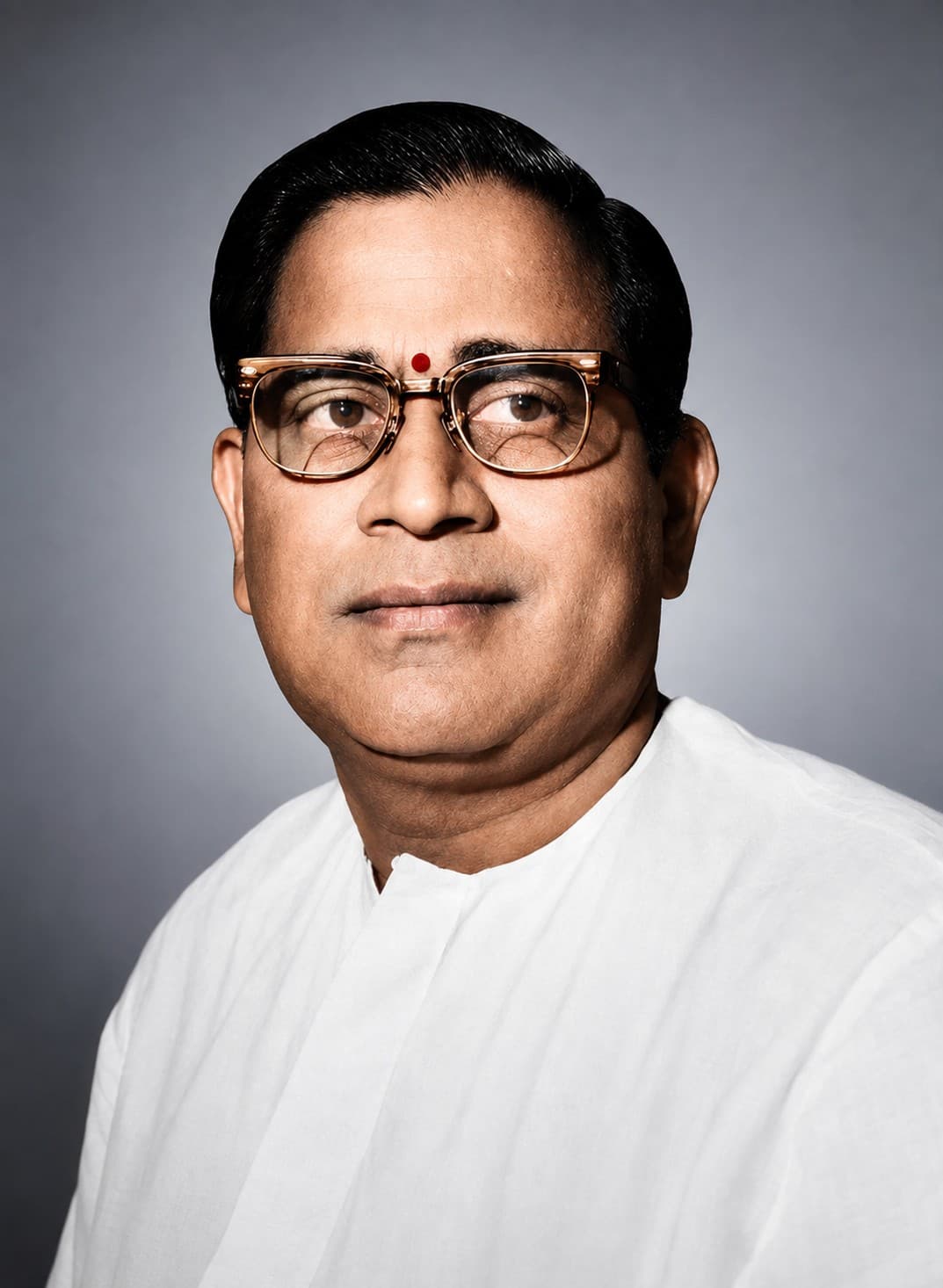
About 'Padmasri' Ghantasala Venkateswara Rao
'Padmasri' Ghantasala Venkateswara Rao occupies a special place in the history of Telugu music. Celebrated as one of the great playback singers and music directors of South India, his voice became closely associated with devotion, emotion, and the musical expression of Telugu poetry.
His rendering of Bhagavadgita brought these qualities together in a deeply memorable way. Rather than approaching the verses as a mere recitation, Ghantasala gave them a musical and devotional character that allowed listeners to experience their meaning through his voice.
For generations of Telugu-speaking families, his Bhagavadgita became more than a recording. It became part of the way the sacred verses were heard, remembered, and cherished.
Ghantasala's Bhagavadgita
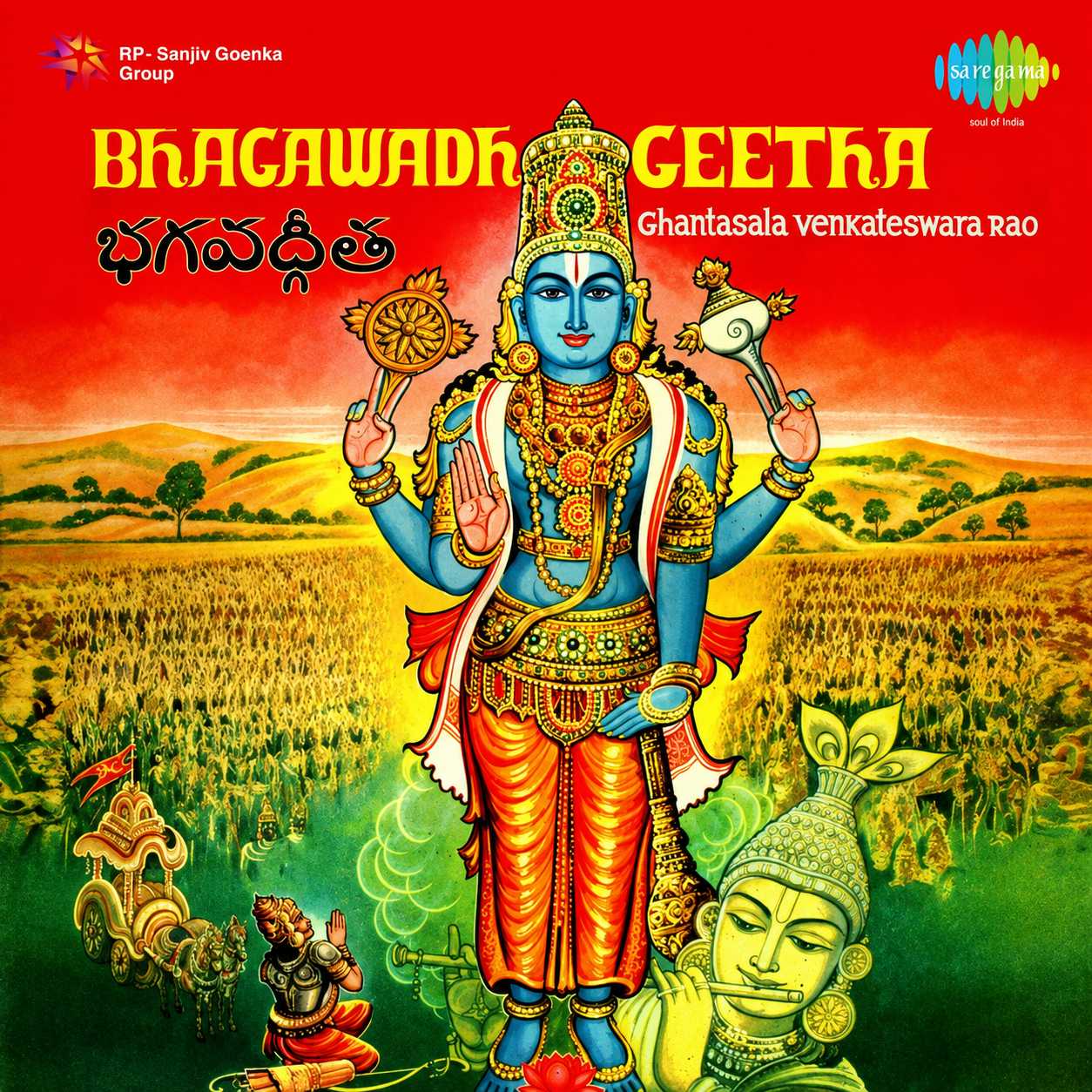
Ghantasala selected 106 verses from the 700 verses of the Bhagavadgita, choosing passages for their spiritual significance and universal appeal. His rendition combined the original Sanskrit verses with their meanings in Telugu, making the recording accessible to listeners while retaining the devotional character of the text.
The recording was produced by HMV (His Master's Voice) and released as a set of two Gramophone records on 21 April 1974 in Vijayawada. The release was presented through the hands of the celebrated Telugu actor ‘Padmasri’ N.T. Rama Rao.
The recording stands as an important moment in the history of devotional music in Telugu, preserving the timeless words of Gita through one of the most recognizable voices of its era.
Why His Rendering Endures
There have been many musical interpretations of the Bhagavadgita, but Ghantasala's rendition has continued to resonate because of the distinctive character of his voice and his ability to convey devotion through music.
His singing brought a sense of reverence, clarity, and emotional depth to the verses. The Sanskrit words remained at the heart of the recording, while the musical treatment gave listeners a way to connect with them emotionally.
For devotees who grew up listening to these recordings, the voice itself became part of the experience of Gita. That enduring connection is perhaps the greatest measure of Ghantasala's contribution to devotional music.
A Legacy That Continues
Ghantasala's Bhagavadgita did not remain confined to its original recordings. Its influence continued through later efforts to present the complete Gita in Telugu musical tradition.
Inspired by this rendering of Bhagavadgita by Ghantasala, Dr. L.V. Gangadhara Sastry — Indian playback singer and music director, undertook the monumental task of singing all 700 verses of Bhagavadgita in Sanskrit, with meanings in Telugu, and English, composing and recording them in his own musical style, while retaining the 106 verses of Sri Ghantasala as a mark of respect to the great man.
Thus, the musical journey of Bhagavadgita continued — not as a replacement of one tradition by another, but as a continuation of a devotional legacy.
Ghantasala's recording helped bring Bhagavadgita into the homes and hearts of generations. The mission that followed sought to carry that reach still further — not simply to preserve the music, but to ensure that Bhagavadgita continued to be experienced as wisdom for living.
Did you know? In his Complete Musical Bhagavadgita project, Dr. L.V. Gangadhara Sastry adopted the same musical rendering for the 106 verses of Ghantasala's Bhagavadgita as a mark of respect and to carry forward Ghantasala's musical tradition.